

With engineering being such a large field of study, it is worth mentioning that within it, there are a few specializations that serve a certain purpose and need a separate set of skills. One of the more popular types is electrical and electronic engineering. While these two branches seemed to be similar, one cannot also deny that there are such factor differences that affect the career and the duties of engineers. This blog post seeks to highlight the differences that exist between electrical and electronic engineering along with their respective fields of work, school of thought, and future expectations in the job market.
What is Electrical Engineering?
The field of Electrical engineering addresses issues that primarily revolve around electricity, electromagnetism, and other electronic devices which seek to apply these concepts. The discipline concentrates on the creation, execution and servicing of all electrical components inclusive of energy production, its active movement across physical connection paths as well as energy dispersion. The work of these engineers is in large systems such as power stations, electrical systems or grids, and green energy generating technologies.
Core Areas of Electrical Engineering:
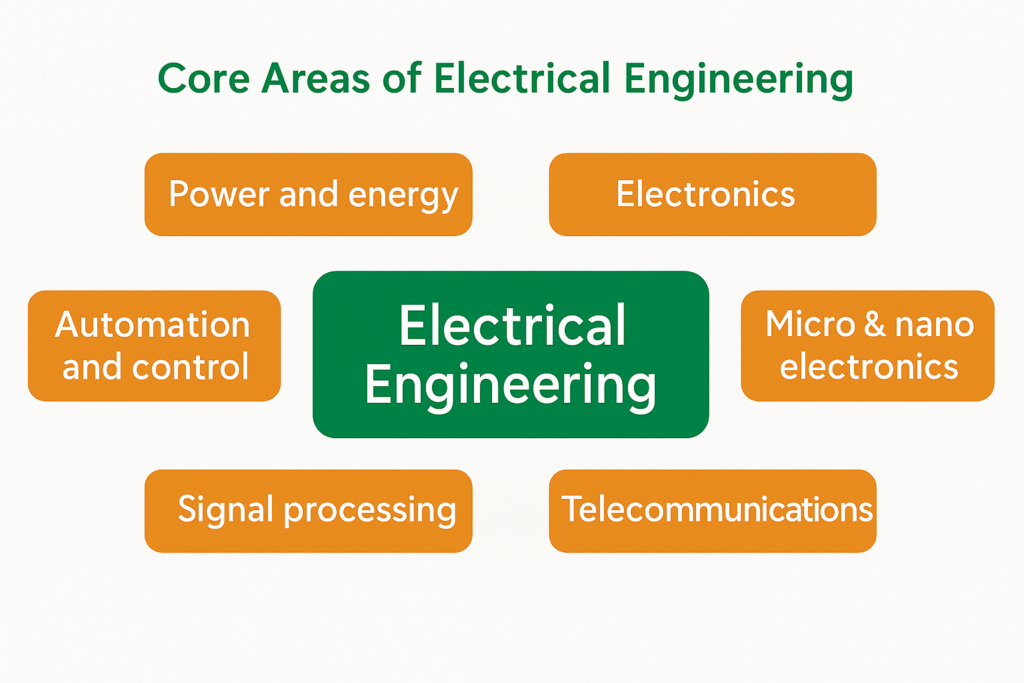
- Power Systems: It deals with the generation, transmission and distribution of the power.
- Control Systems: These are engineered systems that control dynamic processes known as systems.
- Electromagnetics: The behavior of the electric field and the magnetic field is the reason for the study of this field.
- Signal Processing: The signals can be received in a language and then the signals are understood as well as enhanced.
- Power Electronics: The management of electric power through its conversion and also regulating its use.
- Branching Out into the Employment Opportunities: Electrical Engineer
Electrical engineering offers a vast expanse of career options in different sectors including utilities, telecommunications, manufacture and aerospace industries. Power engineer, control engineer and systems engineer are among the common job titles assumed within these fields. The constant pressure to achieve better energy efficiency and more sustainable means of operating a business means that there is still a strong demand for electrical engineering jobs.
What is Electronic Engineering?
However, electronic engineering is a subset that encompasses all standards of engineering where high technology devices and electronic syst3ems: devices and circuits are the priority. This discipline focuses on the designing and application of miniature electronics such as integrated CUP systems, microprocessors and communication appliances. Design and performance of these parts is done by electronic engineers to enhance the efficacy of the systems.
Digital Circuits And Systems Division In Electronics
- Microelectronics: This category of electronic engineering deals with the design of small scale electronic circuits/systems.
- Communication Systems: The development of communication systems involves the transmission of information over various forms such as radio, television, internet etc.
- Embedded Systems: This area deals with a combination of software and hardware in order to successfully create such systems.
- Instrumentation and Measurement: Engineering design of any physical equipment for measuring quantities of interest.
- Computer and Digital Electronics: Analysis and designing of digital circuits and systems is the major concern of this category.
Career Opportunities in Electronic Engineering
Electronic engineers could work in numerous fields, for example: consumer electronics, telecom sector, health and even the automotive industry. Most titles include design engineer, firmware engineer, telecommunications engineer and so on. With the upgrade of technology, there is no shortage of electronic engineers, especially in the area of artificial intelligence and the Internet of Things (IoT).
Key Differences Between Electrical and Electronic Engineering
In the principle there are areas of both electrical and electronic engineering which can be said to be a bit similar. Their use, focus areas tend to vary a great deal apart from the background knowledge. Here are some such differences:
Scope of Study:
- The discourse on electrical engineering covers a wide range of materials, power systems and also includes electromagnetism.
- Engineering of Electronics is concerned only on the designing and usage of electronic devices and electronic circuits.
Applications:
- The field of electrical engineering is often dominated by large quantities of power systems and structures.
- The field of electronic engineering is focused on rather small devices and systems like phone gadgets and medical device systems.
Skills Required:
- In order to work in the field of electrical engineering strong analytical abilities and a profound comprehension of the aspects of electrical engineering is required.
- Persuasive electronic engineering demands sound knowledge in circuit design and embedded soft ware programming.
Educational Pathways:
- Real life practice of power engineering college has a lot of skills such as – control systems – power systems – electronics engineering and so on.
- Electronic engineering degree would typically focus on face recognition, embedded systems, circuit design and microprocessors.
Tools and Technologies:
- While preparing Power system designs and Control of Electrical grids teachers adopt tools with the electrical engineers.
- While handling software and hardware tools, electronic engineers perform circuit design, simulation and testing tasks.
Educational Requirements
Electrical Engineering Degrees
An aspiring electrical engineer is required to possess a Bachelor of Science designated in Electrical Engineering (BSEE). This degree program covers the basic fundamentals like circuit theory, electromagnetism as well as power system. Most of the electrical engineers tend to go for pursuing a master’s degree or seeking professional qualifications in order to broaden their areas of understanding.
Electronic Engineering Degrees
In like manner, electronic engineers on their part saddle a Bachelor of Science in Electronic Engineering (BSECE). This program predominantly centers on circuit development, microelectronics, as well as embedded systems development. More advanced degrees or investigation of exclusive certifications is also advantageous in one’s career growth.
Industry Trends and Future Outlook
Coming soon SRS For our new customers, note that this service when placed in The authoritative reviews will affect the usability of the output content. In the recent past electrical and electronic engineering has been the most growing and continues to grow with advancement in technology and an increase in the demand of renewable energy. Significant trends that shape these industries include:
Renewable Energy:

Due to increased healthy competition in the power industry, there is a move to more clean type of energy and electrical engineers have key responsibilities in the design as well as improvement of the renewable energy system.
Smart Technologies:
As the adoption of smart homes and cities accelerates, the need for trained electronic engineers in IoT and automation technologies is growing.
Artificial Intelligence:

These two disciplines are subject to the influence of AI as well with electrical engineers aiming for power-efficient systems and electronic engineers working on AI systems.
Telecommunications:
The requirements of instantaneous communication and development of complex information exchange systems will never cease creating more work for electrical engineers as well as electronic engineers.
Conclusion
In summary, electrical and electronic engineering also referred to as telecommunications engineering are essential branches of engineering that realize the many possibilities in technology. Whereas electrical engineering deals with power supply systems and their applications on a larger scale, electronic engineering is about development of smaller gadgets and electronics content. Knowing the differences will enable students pursuing all these branches of engineering make informed choices about they want to study and what career to pursue. If you love the feel of a live wire or the design of electronic circuits there is no need to worry both fields have room for development and creativity.
Read our latest article about Transformer Protection Basics
Frequently Asked Questions (FAQs) on Electrical and Electronic Engineering
Q1.What is the main difference between Electrical and Electronic Engineering?
The scope and type of systems each discipline deals with is the prime distinguishing factor between Electrical and Electronic Engineering. A branch of Electrical Engineering deals with high-level power generation, transmission, and motor control systems. It encompasses high-voltage power equipment such as electrical machines, transformers, and power distribution networks. Electrical engineers are responsible for developing and maintaining systems which provide reliable power supply over vast distances to numerous geographical locations, including houses, industries, and urban centers. On the other hand, Electronic Engineering deals with small, low-voltage systems that electronically control and send information through signals. This branch consists of working with diodes, transistors, integrated circuits (ICs), and microprocessors. The design of small, integrated and sophisticated electronic systems such as mobile phones, computers, medical equipment, and embedded systems is the work of Electronic engineers. Therefore, in the scope of this discussion, Electrical and Electronic Engineering can be differentiated on the basis of their usage—macro-level energy systems and micro-level signaling systems.
Q2.Which field has better job opportunities: Electrical or Electronic Engineering?
As you weigh job options in Electrical and Electronic Engineering, both fields have promising job prospects, although the prospects differ based on the field and technology dynamics. Electrical Engineering is still dominating the more traditional fields, including energy, utilities, construction, transportation, and industrial manufacturing. These engineers actively participate in developing, maintaining, and expanding the electrical systems and infrastructures because of the considerable growth in the demand for sustainable and renewable energy systems. Keeping in mind the pace of development, Electronic Engineering is doing exceptionally well in consumer electronics, telecommunication, automotive electronics, robotics, and healthcare technology industries. Electronic engineers are especially in demand as the use of automated digital devices and the Internet of Things (IoT) continues to surge. Thus, the decision considering Electrical and Electronic Engineering should primarily be based on interests, as both have incredible prospects for employment and advancement but in different fields.
Q3.What are the core subjects in Electrical vs Electronic Engineering?
The curriculum for Electrical vs Electronic Engineering has a common background in mathematics, physics, and elementary circuit theory, but departs widely at the level of specialization. In Electrical Engineering, major subjects are: electrical machines, power systems, electromagnetic fields, high-voltage engineering, control systems, and power electronics. These subjects prepare students to operate and maintain large-scale energy systems and industrial electrical systems. On the other hand, Electronic Engineering focuses on micro-level technologies and has core courses such as analog and digital electronics, semiconductor devices, embedded systems, signal processing, VLSI design, and communication systems. Other than that, students also learn circuit simulation, microcontroller programming, and even PCB design as part of the course. The difference in subjects in Electrical and Electronic Engineering is important as it allows learners and practitioners to calibrate their educational endeavor with requirements in the job market.
Q4.Can Electrical Engineers work in Electronic Engineering roles and vice versa?
The two fields Electrical and Electronic Engineering may be different, but there is significant knowledge overlap that provides some level of role flexibility. For instance, Electrical Engineers with sound control systems, sensors, and signal processing knowledge can engage in automation and robotics, which is mostly regarded as the domain of electronic engineering. In the same way, Electronic Engineers knowledgeable in power electronics and circuit design can participate in renewable energy systems and smart grids development. More deeply specialized knowledge is often required however for a particular area of work such as industry. For example, working at high voltage substations usually demand extensive knowledge in Electrical Engineering. On the other hand, designing a smartphone’s processor will require strong skills in Electronic engineering. Thus, while cross-functionality as described can occur, especially in multidisciplinary projects, the distinction in Electrical and Electronic Engineering need to be clearly defined for purposeful career advancement.
Q5.Which is harder: Electrical Engineering or Electronic Engineering?
The challenge in Electrical Engineering compared to Electronic Engineering stems from the complexity of the mathematics involved, as well as the person’s interests. Electrical Engineering usually comprises sophisticated mathematical models, electromagnetic theory, and requires the analysis of large systems. For example, abstract thinking along with a good grasp and understanding of physics and calculus is necessary in understanding the operation of massive systems such as the national power grid. In contrast, Electronic Engineering requires a great deal of concentration and attention in order to succeed, particularly in areas such as circuits, digital logic design, and microprocessor programming. The intellectual demand of troubleshooting tiny components and debugging code for embedded systems is high. The same applies for both branches of engineering, and neither is more difficult than the other. It is best for students to think about their preferred working conditions and best suited learning strategies when deciding on Electrical and Electronic Engineering.
Q6.Is Electronic Engineering a subset of Electrical Engineering?
Summerfield Electronics began with the development of Electronic Engineering in the early 1950s as a branch of Electrical Engineering, dealing with low power circuits and signal processing. Early vacuum tubes and transistor circuits were categorized as parts of electrical systems, technology was much simpler back in those days. Later on, as technology grew and we reached the digital era, Electronic Engineering began to rapidly advance as an independent discipline. There are now marked differences in the scope, applications, and the academic programs offered in the two fields. For instance, most modern universities provide distinct degree tracks for Electrical and Electronic Engineering and industries segregate their employment opportunities accordingly.
Q7.Which engineering branch pays more: Electrical or Electronic?
The argument of salary between the two branches of engineering greatly differs depending on factors such as career experience, industry sector, geographic location, and specialization. In general, Electronic Engineering seems to prevail in terms of profitability, especially for those working in high-tech industries such as semiconductor manufacturing, telecommunications, or aerospace. However, Engineering professionals specializing in power generation, utilities, or constructing large-scale infrastructure projects do tend to receive competitive salaries as well. These linemen often require professional licensure and bear public safety responsibility, and their compensation reflects that. Engineers who focus on more advanced fields such as embedded systems, artificial intelligence hardware, or the Internet of Things are highly sought after, commanding exceptional salaries. Ultimately, both electrical and electronic engineers provide rewarding career opportunities and the choice of which discipline to pursue usually depends on individual skills and the industries nurtured in the region.
Q8.What industries hire Electrical and Electronic Engineers?
Electrical and Electronic Engineers are hired across a wide variety of industries due to their essential role in developing and maintaining modern infrastructure and technology. In the energy sector, Electrical Engineers are key players in the design and management of power plants, electrical grids, renewable energy systems, and battery storage technologies. Their expertise ensures that cities and industries have a stable and efficient power supply. In contrast, Electronic Engineers are more often employed in the consumer electronics and technology industries, where they design and build devices like smartphones, computers, wearables, and smart home systems.
The automotive industry also heavily recruits both types of engineers. Electrical Engineers are needed for electric power systems and charging infrastructure, while Electronic Engineers focus on embedded systems, sensors, and control units used in electric and autonomous vehicles. In telecommunications, engineers are responsible for building the hardware and software infrastructure behind internet services, mobile networks, satellites, and data centers. Meanwhile, the aerospace and defense sectors rely on engineers to develop advanced systems for navigation, communication, radar, and energy management in aircraft and spacecraft. Finally, industries focused on robotics, automation, and manufacturing employ Electrical Engineers for motion control and power systems, while Electronic Engineers work on microcontrollers, circuit boards, and embedded systems that bring machines to life.
Q9. What are the future trends in Electrical and Electronic Engineering?
The future of Electrical and Electronic Engineering is shaped by innovation in clean energy, smart systems, and digital connectivity. Electrical engineers are focusing on emerging technologies like smart grids, solar and wind energy systems, and electric vehicles. Their role is critical in developing sustainable and efficient power solutions to meet global energy demands.
On the other hand, electronic engineers are at the heart of advancements in IoT devices, embedded systems, AI-powered hardware, robotics, and 5G/6G communication networks. These technologies require precise circuit design, miniaturization, and intelligent control systems—all core strengths of electronic engineering.
As the lines between electrical and electronic technologies blur, electrical and electronic engineers increasingly collaborate on projects like smart cities, autonomous transportation, and industrial automation. This integration makes both electrical and electronic essential for the future of technology, sustainability, and digital infrastructure.
Q10.What skills are essential to become a successful electrical and electronic engineer?
To become a successful electrical and electronic engineer, you need strong analytical and problem-solving skills, supported by a solid background in mathematics and physics. Electrical engineers must understand power systems, circuit theory, control systems, and be proficient with tools like MATLAB and AutoCAD Electrical. Meanwhile, electronic engineers should have expertise in digital electronics, microcontrollers, embedded systems, and be skilled in programming languages such as C or Python, along with design tools like Altium Designer or Proteus. Both roles demand attention to detail, excellent troubleshooting abilities, and strong communication skills, as they often work on complex, collaborative projects. In today’s rapidly evolving tech landscape, adaptability and a commitment to continuous learning are also essential traits for any electrical and electronic engineer aiming to thrive in their career.